


You are here
Has Bitcoin been derivativized out of its scarcity, as gold was?
The Phantom Supply Problem: How Wall Street's Derivatives Machine May Be Quietly Dismantling Bitcoin's Scarcity Thesis
By Corey Blackwell
Web Pro News, Lexington, Kentucky
Friday, February 6, 2026
For more than a decade Bitcoin's investment case has rested on an elegant, almost poetic premise: there will only ever be 21 million coins.
That hard cap, enforced by immutable code, was supposed to make Bitcoin the world's first truly scarce digital asset -- a hedge against central bank money printing, a digital gold for the internet age.
... Dispatch continues below ...
... ADVERTISEMENT ...
Guanajuato Silver Is Reactivating Silver and Gold Mines in Mexico
Guanajuato Silver is a precious metals producer reactivating past-producing silver and gold mines in central Mexico. The company produces silver and gold concentrates from the El Cubo Mines Complex, Valenciana Mines Complex, and the San Ignacio mine. All three mines are located within the state of Guanajuato, which has a 480-year mining history.
Additionally, the company produces silver, gold, lead, and zinc concentrates from the Topia mine in northwestern Durango state.
With four operating mines and three processing facilities, Guanajuato Silver is one of the fastest growing silver producers in Mexico.
For more information, please visit:
But a provocative argument gaining traction among veteran crypto analysts suggests that this foundational thesis may have already been fatally compromised -- not by a code change or a 51% attack, but by the very financial infrastructure that was supposed to legitimize Bitcoin and carry it into the mainstream.
The argument, laid out in stark terms by the widely followed crypto analyst 0xNobler on X, is straightforward and unsettling: The moment Wall Street built a derivatives superstructure on top of Bitcoin -- cash-settled futures, perpetual swaps, options chains, exchange-traded funds, prime broker lending, wrapped BTC, and total return swaps -- it effectively created a mechanism for manufacturing synthetic supply. And when supply can be synthetically created at will, scarcity ceases to function as a price floor.
"The moment supply can be synthetically created, scarcity is gone," 0xNobler wrote. "And when scarcity is gone, price stops being discovered on-chain and starts being set in derivatives."
This is not an entirely novel observation. Commodity market veterans have long argued that the same structural dynamic hollowed out price discovery in gold, silver, and oil markets decades ago.
The London Bullion Market Association and Comex futures markets trade multiples of the world's actual physical gold supply on any given day. The Bank for International Settlements has documented how notional derivatives volumes in commodity markets dwarf physical delivery many times over.
Critics of these markets, including the Gold Anti-Trust Action Committee (GATA), have spent years arguing that paper gold suppresses the price of physical metal by creating an effectively unlimited synthetic float. What 0xNobler and a growing chorus of Bitcoin-native analysts are now arguing is that the same playbook has been imported wholesale into crypto.
The mechanics are not complicated. A single physical Bitcoin sitting in a custodial vault -- say, at Coinbase Custody, which serves as custodian for multiple spot Bitcoin ETFs -- can simultaneously serve as the backing for an ETF share, collateral for a futures contract on the Chicago Mercantile Exchange, the reference asset for a perpetual swap on an offshore exchange, the underlying for an options delta hedge, collateral for a prime broker loan, and the reference for a structured note sold to institutional clients.
"That's six claims on one coin," 0xNobler argued. "That is not a free market. That is a fractional-reserve price system wearing a Bitcoin mask." ...
... For the remainder of the report:
* * *
Support GATA by purchasing
Stuart Englert's "Rigged"
"Rigged" is a concise explanation of government's currency market rigging policy and extensively credits GATA's work exposing it. Ten percent of sales proceeds are contributed to GATA. Buy a copy for $14.99 through Amazon:
* * *
Help keep GATA going:
GATA is a civil rights and educational organization based in the United States and tax-exempt under the U.S. Internal Revenue Code. Its e-mail dispatches are free, and you can subscribe at:
To contribute to GATA, please visit:
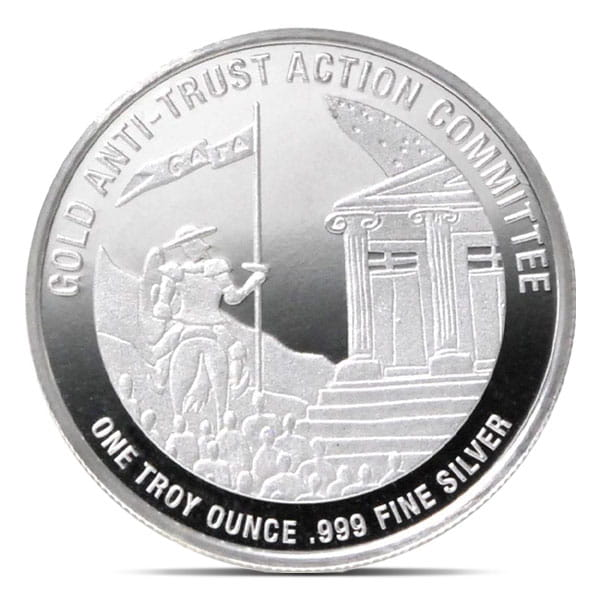
Donations of $500 or more will entitle the donor to a 1-ounce silver round commemorating GATA's work:
https://www.gata.org/sites/default/files/GATA-silver-round-front.png